
How Long Does It Take to Cycle a Fish Tank
If you’re wondering how long does it take to cycle a fish tank, you’re asking one of the most important questions in aquarium keeping. The cycling process typically takes 4-8 weeks for most aquariums, but this timeline can vary significantly based on several factors including tank size, temperature, and the cycling method you choose.
Understanding the aquarium nitrogen cycle is crucial for maintaining healthy fish and preventing new tank syndrome. This comprehensive guide will walk you through everything you need to know about cycling your fish tank, from the basic timeline to advanced troubleshooting techniques.
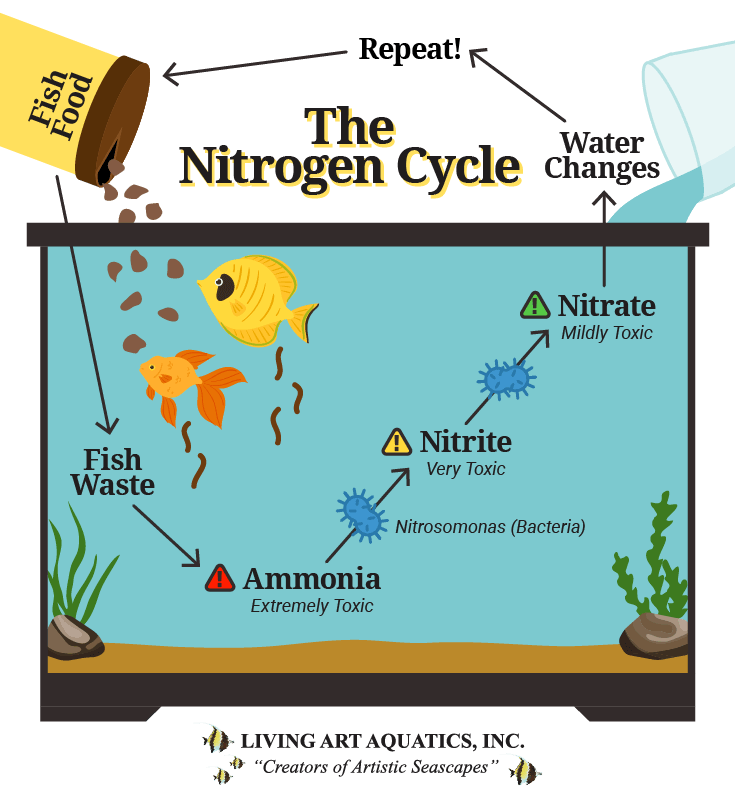 The Aquarium Nitrogen Cycle Process
What is Aquarium Cycling?
Aquarium cycling refers to the process of establishing beneficial bacteria colonies in your tank that convert toxic waste products into less harmful compounds. This biological process is also known as the nitrogen cycle and is essential for creating a safe environment for fish.
During cycling, beneficial bacteria convert ammonia (highly toxic to fish) into nitrite (still toxic), and then different bacteria convert nitrite into nitrate (much less harmful). Without this process, fish waste and decomposing organic matter would quickly create lethal conditions in your aquarium.
The cycling process involves three main stages:
- Ammonia Stage: Organic waste breaks down and releases ammonia
- Nitrite Stage: Nitrosomonas bacteria convert ammonia to nitrite
- Nitrate Stage: Nitrobacter bacteria convert nitrite to nitrate
Why is Cycling Essential for Your Aquarium?
Cycling is not optional—it’s a biological necessity for any healthy aquarium. Here’s why the nitrogen cycle is so crucial:
- Prevents Fish Death: Uncycled tanks can kill fish within hours due to ammonia poisoning
- Establishes Biological Filtration: Creates a self-sustaining waste management system
- Prevents New Tank Syndrome: Avoids the common beginner mistake of adding fish too early
- Creates Stable Water Conditions: Provides consistent, safe water parameters
- Reduces Maintenance: Well-cycled tanks require less frequent water changes
How Long Does It Take to Cycle a Fish Tank? Detailed Timeline
The question of how long does it take to cycle a fish tank doesn’t have a single answer, as the timeline varies based on multiple factors. However, here are the typical timeframes:
| Cycling Method | Typical Duration | Range | Best For |
|---|---|---|---|
| Fishless Cycling | 4-6 weeks | 3-8 weeks | Beginners, humane approach |
| Fish-in Cycling | 6-8 weeks | 4-12 weeks | Experienced aquarists only |
| Plant Cycling | 4-6 weeks | 3-10 weeks | Planted tank enthusiasts |
| Seeded Cycling | 2-3 weeks | 1-4 weeks | When established media available |
| Instant Cycling | 1-7 days | 1-14 days | With bottled bacteria products |
Factors Affecting Cycling Time
Several environmental and setup factors significantly impact how long your tank takes to cycle:
| Factor | Impact on Cycling Time | Optimal Range | Notes |
|---|---|---|---|
| Temperature | Higher = Faster | 78-86°F (26-30°C) | Bacteria multiply faster in warm water |
| pH Level | Neutral = Faster | 7.0-8.0 | Bacteria prefer slightly alkaline conditions |
| Oxygen Level | Higher = Faster | High aeration | Nitrifying bacteria need oxygen |
| Surface Area | More = Faster | Maximize filter media | More space for bacteria colonization |
| Ammonia Source | Consistent = Faster | 2-4 ppm ammonia | Steady food source for bacteria |
| Water Movement | Good flow = Faster | Moderate circulation | Distributes nutrients and oxygen |
 Aquarium Cycling Timeline Chart
Three Methods to Cycle Your Fish Tank
Method 1: Fishless Cycling (Recommended)
Fishless cycling is the most humane and reliable method for beginners. This approach uses an external ammonia source to feed the beneficial bacteria without risking fish health.
Step-by-Step Fishless Cycling Process:
- Set Up Your Tank: Install all equipment (filter, heater, substrate) and fill with dechlorinated water
- Add Ammonia Source: Use fish food, pure ammonia solution, or commercial ammonia products
- Monitor Temperature: Maintain 78-86°F for optimal bacterial growth
- Test Water Daily: Check ammonia, nitrite, and nitrate levels
- Wait for Nitrite Spike: Usually occurs in week 2-3
- Watch for Nitrate Rise: Indicates final stage of cycling
- Confirm Completion: Zero ammonia and nitrite, detectable nitrates
Method 2: Fish-in Cycling
Fish-in cycling uses hardy fish to provide ammonia through their waste. This method requires constant monitoring and frequent water changes to prevent fish stress.
Hardy Fish Species for Fish-in Cycling:
| Fish Species | Hardiness Level | Temperature Range | Notes |
|---|---|---|---|
| White Cloud Mountain Minnow | Very Hardy | 60-72°F | Excellent for beginners |
| Zebra Danio | Very Hardy | 64-75°F | Active, tolerates poor water quality |
| Cherry Barb | Hardy | 72-79°F | Peaceful, good for cycling |
| Platy | Hardy | 70-77°F | Easy to care for |
| Guppy | Moderately Hardy | 72-82°F | Colorful, widely available |
Method 3: Plant Cycling
Plant cycling uses live aquatic plants to absorb ammonia and nitrate while beneficial bacteria establish. This natural method creates a balanced ecosystem from the start.
Plant Cycling Requirements:
- Heavy plant load (70% of tank volume)
- Fast-growing species (hornwort, elodea, java moss)
- Adequate lighting (8-10 hours daily)
- CO2 supplementation (optional but helpful)
- Liquid fertilizers for plant growth
Week-by-Week Cycling Timeline
Here’s what to expect during a typical fishless cycling process:
| Week | Ammonia Level | Nitrite Level | Nitrate Level | What’s Happening |
|---|---|---|---|---|
| Week 1 | Rising to 2-4 ppm | 0 ppm | 0 ppm | Adding ammonia source, initial bacterial growth |
| Week 2 | Stable 2-4 ppm | Beginning to rise | 0 ppm | Ammonia-oxidizing bacteria establishing |
| Week 3 | Starting to drop | Spiking (2-5 ppm) | Beginning to appear | First bacterial colony active, second forming |
| Week 4 | Dropping quickly | Peak levels | Rising steadily | Both bacterial colonies working |
| Week 5 | Near zero | Dropping rapidly | Continuing to rise | System nearly balanced |
| Week 6 | 0 ppm | 0 ppm | 10-40 ppm | Cycling complete! |
 Understanding the Nitrogen Cycle Chemistry
How to Know When Your Tank is Cycled
Your aquarium is fully cycled when these conditions are met consistently for at least one week:
- ✓ Ammonia levels: 0 ppm
- ✓ Nitrite levels: 0 ppm
- ✓ Nitrate levels: 10-40 ppm (detectable)
- ✓ Can process 2-4 ppm ammonia within 24 hours
- ✓ Consistent readings for 7+ days
Final Cycling Test: Add 2-4 ppm of ammonia to your tank. If both ammonia and nitrite read 0 ppm within 24 hours while nitrates increase, your cycle is complete.
Water Parameters to Monitor During Cycling
Regular testing is crucial for successful cycling. Here’s your complete monitoring guide:
| Parameter | Safe Range | Cycling Range | Test Frequency | Action if Out of Range |
|---|---|---|---|---|
| Ammonia | 0 ppm | 2-4 ppm | Daily | Water change if >5 ppm |
| Nitrite | 0 ppm | 0-5 ppm | Daily | Water change if >5 ppm |
| Nitrate | 0-20 ppm | 10-40 ppm | Every 2-3 days | Water change if >50 ppm |
| pH | 6.5-8.5 | 7.0-8.0 | Every 2-3 days | Adjust with buffer solutions |
| Temperature | Species dependent | 78-86°F | Daily | Adjust heater settings |
Testing Schedule for Aquarium Cycling
| Week | Daily Tests | Additional Tests | Actions Required |
|---|---|---|---|
| 1-2 | Ammonia, Temperature | pH (every 3 days) | Add ammonia source, maintain temperature |
| 3-4 | Ammonia, Nitrite, Temperature | pH, Nitrate (every 2 days) | Continue ammonia dosing, monitor nitrite spike |
| 5-6 | All parameters | Final ammonia processing test | Prepare for fish introduction |
Common Cycling Mistakes to Avoid
Learn from these frequent cycling errors to ensure success:
| Mistake | Consequence | Solution | Prevention |
|---|---|---|---|
| Adding fish too early | Fish death, stressed fish | Remove fish, complete cycle | Wait for 0 ammonia/nitrite readings |
| Over-cleaning filters | Removes beneficial bacteria | Re-seed with established media | Rinse in tank water only |
| Using chlorinated water | Kills beneficial bacteria | Use water conditioner | Always dechlorinate water |
| Inconsistent ammonia source | Stalled cycling | Resume regular feeding/dosing | Maintain steady ammonia levels |
| Wrong pH levels | Slow or stalled cycling | Adjust pH to 7.0-8.0 | Test and maintain proper pH |
| Insufficient aeration | Poor bacterial growth | Increase aeration/circulation | Ensure adequate oxygen levels |
How to Speed Up the Cycling Process
While cycling takes time, these methods can accelerate the process safely:
Biological Acceleration Methods
- Seeded Media: Add filter media from established tanks
- Bottled Bacteria: Use quality bacterial supplements (Seachem Stability, API Quick Start)
- Live Rock: For saltwater tanks, use cured live rock
- Substrate Seeding: Add gravel from cycled tanks
Environmental Optimization
- Increase Temperature: Maintain 84-86°F during cycling
- Maximize Surface Area: Use high-quality filter media
- Boost Aeration: Add extra air stones or powerheads
- Maintain Optimal pH: Keep pH between 7.5-8.0
Troubleshooting Cycling Problems
When cycling doesn’t go as planned, here are solutions to common issues:
Stalled Cycling (No Progress After 3+ Weeks)
Possible Causes and Solutions:
- Low pH: Raise pH to 7.0-8.0 using baking soda or commercial buffers
- Low Temperature: Increase to 78-86°F with aquarium heater
- Chlorine/Chloramine: Use quality water conditioner for all water
- Insufficient Ammonia: Maintain 2-4 ppm ammonia levels
- Poor Aeration: Add air stones or increase surface agitation
Ammonia Won’t Drop
Troubleshooting Steps:
- Test pH – adjust if below 7.0
- Check temperature – increase if below 78°F
- Verify dechlorination of all water
- Add bacterial supplement
- Increase aeration
Nitrite Spike Too High
Management Actions:
- Perform 25-50% water change if nitrite >5 ppm
- Reduce or stop ammonia dosing temporarily
- Add salt (1 tsp per gallon) to reduce nitrite toxicity
- Increase aeration
 Complete Guide to Aquarium Cycling
Frequently Asked Questions About Aquarium Cycling
Can I add fish during cycling?
It’s not recommended during fishless cycling. For fish-in cycling, only add 1-2 hardy fish and monitor water parameters daily with frequent water changes.
How often should I test water during cycling?
Test ammonia and temperature daily. Add nitrite testing when ammonia begins dropping (usually week 2-3). Test nitrate when nitrite appears.
What if my cycle takes longer than 8 weeks?
Extended cycling is usually due to low temperature, poor pH, insufficient aeration, or chlorinated water. Address these factors and consider adding bacterial supplements.
Can I use fish food to cycle my tank?
Yes, fish food works well for fishless cycling. Add the amount you’d feed your intended fish load daily and let it decompose to produce ammonia.
Do I need to change water during cycling?
Generally no for fishless cycling, unless ammonia or nitrite exceed 5 ppm. For fish-in cycling, change 25% of water every 2-3 days or when levels spike.
Can plants speed up cycling?
Yes, live plants absorb ammonia and compete with harmful bacteria. Fast-growing plants like hornwort and java moss are particularly effective.
Is cycling different for saltwater tanks?
The basic nitrogen cycle is the same, but saltwater cycling often takes longer (6-10 weeks) and may use live rock or sand for bacterial seeding.
What’s the difference between cycling with and without fish?
Fishless cycling is safer and more controlled, while fish-in cycling requires constant monitoring and frequent water changes to prevent fish stress or death.
Understanding how long does it take to cycle a fish tank is fundamental to successful aquarium keeping. While the typical 4-8 week timeline may seem lengthy, this investment in biological stability is crucial for your fish’s health and your long-term success.
Remember these key points:
- Fishless cycling is the safest method for beginners
- Temperature, pH, and aeration significantly affect cycling time
- Daily testing is essential during the cycling process
- Never rush the process by adding fish too early
- Seeded media can safely accelerate cycling
The nitrogen cycle continues throughout your aquarium’s life, making those initial weeks of patience worthwhile. A properly cycled tank provides a stable foundation for a thriving aquatic ecosystem that will bring you years of enjoyment.
Take time to cycle properly, and you’ll be rewarded with healthy, vibrant fish and a beautiful aquarium that’s a joy to maintain. Remember, the best aquariums are built on patience, understanding, and respect for the natural processes that sustain aquatic life.
 English (UK)
  Français
  العربية
  Deutsch
  Ελληνικά
  Bahasa Indonesia
  日本語
日本語  한국어
한국어  Português
  Русский
  Dansk
Dansk  Čeština
  Español
  Latviešu valoda
  Italiano
  Svenska
  Suomi
Suomi  Magyar
  Hrvatski
  Polski
  Slovenščina
  Română
  ไทย
ไทย  Türkçe
  Українська
  Tiếng Việt