
How to Maintain a Small Fish Tank
Maintaining a small fish tank is both an art and a science. While many beginners assume smaller tanks are easier to care for, the reality is quite different. Small aquariums require more frequent attention and precise maintenance because water parameters can change rapidly in limited water volumes.
This comprehensive guide combines expert advice from Reddit’s r/Aquariums community (1.4M+ members) and popular Facebook aquarium groups to help you master small tank maintenance. Whether you have a 5-gallon betta tank or a 10-gallon community setup, these proven strategies will keep your aquatic pets healthy and thriving.
Understanding Small Tank Challenges
Why Small Tanks Need More Care
| Factor | Small Tank (5-10 gallons) | Large Tank (40+ gallons) |
|---|---|---|
| Water Stability | Changes rapidly within hours | Stable for days |
| Temperature Fluctuations | Fast swings (±5°F possible) | Gradual changes |
| Waste Buildup | Accumulates quickly | Dilutes easier |
| Error Margin | Very small – mistakes costly | More forgiving |
| Maintenance Frequency | 1-2 times per week | Once per week |
| Beginner Difficulty | Moderate to High | Low to Moderate |
The 5 Golden Rules of Small Tank Maintenance
Rule #1: Cycle Your Tank Before Adding Fish
The nitrogen cycle is the process where beneficial bacteria convert toxic fish waste (ammonia) into less harmful substances. This biological process takes 4-6 weeks to establish in a new tank.
| Week | What Happens | Action Required | Expected Readings |
|---|---|---|---|
| 1-2 | Ammonia rises | Add fish food daily OR pure ammonia | Ammonia: 2-4 ppm |
| 3-4 | Nitrite bacteria colonize | Continue feeding, test water daily | Ammonia drops, Nitrites spike |
| 5-6 | Nitrate bacteria establish | Test until stable readings | Nitrites drop, Nitrates rise |
| 7+ | Tank Fully Cycled | Add fish gradually (2-3 per week) | Ammonia: 0, Nitrite: 0, Nitrate: 5-20 ppm |
Rule #2: Master Weekly Water Changes
Step-by-Step Water Change Guide
| Step | Action | Important Notes | Time Required |
|---|---|---|---|
| 1 | Prepare New Water | Fill bucket, match temperature (75-78°F), add conditioner | 30 minutes before |
| 2 | Turn Off Equipment | Heater and filter OFF during water change | 1 minute |
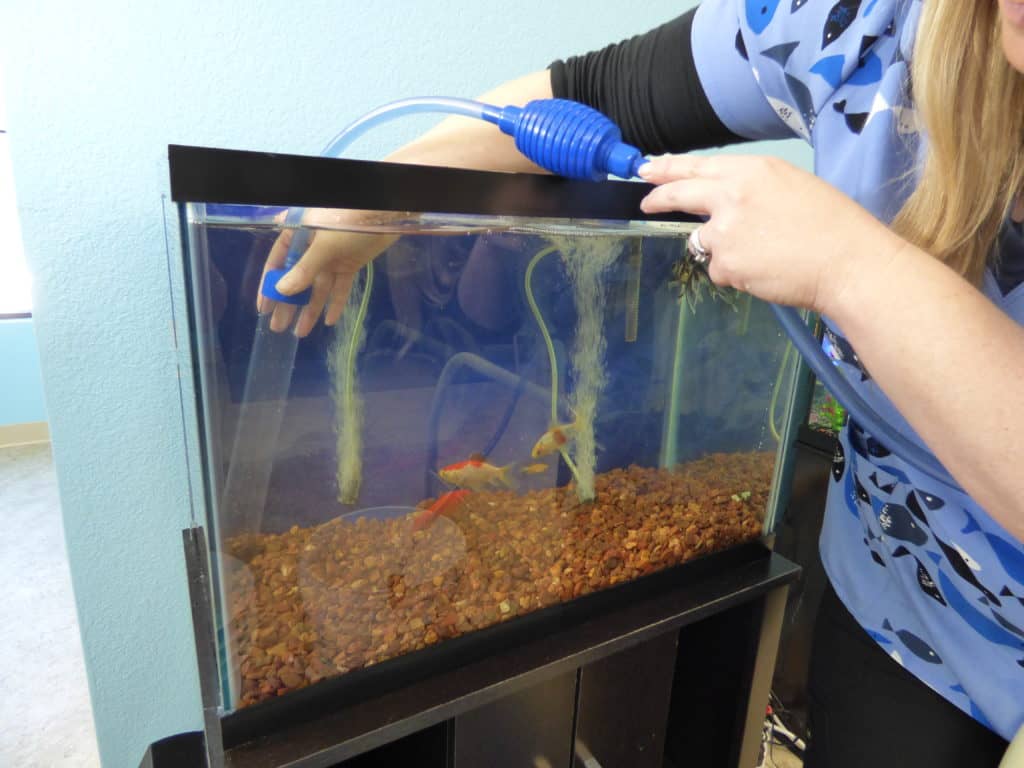
| 3 | Remove Old Water | Use gravel vacuum, remove 25-30% water | 10-15 minutes |
| 4 | Clean Glass | Scrape algae with algae scraper/pad | 5 minutes |
| 5 | Add New Water | Pour slowly, aim at decorations not fish | 5-10 minutes |
| 6 | Turn On Equipment | Wait 5 minutes, then restart filter and heater | 1 minute |
Rule #3: Never Overfeed Your Fish
| Tank Size | Daily Food Amount | Feeding Frequency | Feeding Rule |
|---|---|---|---|
| 5 gallon | 2-3 small pinches | Once or twice daily | What fish eat in 2-3 minutes |
| 10 gallon | 3-4 small pinches | Once or twice daily | Remove uneaten food immediately |
| All sizes | Fast 1 day per week | Skip feeding every 7th day | Reduces waste, improves water quality |
Rule #4: Test Water Parameters Regularly
Essential Water Tests for Small Tanks:
| Parameter | Safe Range | Danger Level | Action if Outside Range |
|---|---|---|---|
| Ammonia (NH3) | 0 ppm | Above 0.25 ppm | Immediate 50% water change, test daily |
| Nitrite (NO2) | 0 ppm | Above 0.25 ppm | Immediate 50% water change, add bacteria |
| Nitrate (NO3) | 5-40 ppm | Above 80 ppm | Increase water change frequency |
| pH | 6.5-8.0 | Below 6.0 or above 8.5 | Stability more important than exact number |
| Temperature | 75-78°F | Below 70°F or above 82°F | Adjust heater, check room temperature |
Rule #5: Maintain Consistency
Complete Weekly Maintenance Schedule
Daily Tasks (2-3 Minutes)
| Task | What to Check | Red Flags |
|---|---|---|
| Check Temperature | Should be stable at 75-78°F | Fluctuations more than 2°F |
| Observe Fish Behavior | Active swimming, normal appetite | Hiding, gasping at surface, not eating |
| Feed Fish | Food consumed in 2-3 minutes | Uneaten food sinking to bottom |
| Check Equipment | Filter running smoothly, heater on | Strange noises, equipment not working |
Weekly Tasks (30-45 Minutes)
- Test Water Parameters – Ammonia, Nitrite, Nitrate, pH
- Perform 25-30% Water Change – Use gravel vacuum
- Clean Inside Glass – Remove algae with scraper
- Trim Dead Plant Leaves – Remove decaying matter
- Wipe Outside Glass – Clean fingerprints and water spots
- Check Filter Flow – Should be strong and steady
Bi-Weekly Tasks (15 Minutes)
- Rinse Filter Media – In old tank water ONLY
- Clean Decorations – Remove algae buildup
- Inspect Equipment – Check for wear and tear
Monthly Tasks (20-30 Minutes)
- Deep Clean Decorations – Soak in dechlorinated water
- Replace Filter Cartridges – If necessary (not always needed)
- Check Air Pump Diaphragm – Replace if weak airflow
- Review Fish Health – Look for signs of disease or stress
Top 10 Beginner Mistakes
| # | Mistake | Why It’s Harmful | Solution |
|---|---|---|---|
| 1 | Not Cycling Tank | Ammonia poisoning kills fish within days | Cycle 4-6 weeks before adding any fish |
| 2 | Buying Too Small Tank | Parameters unstable, very limited stocking | Start with 10+ gallons minimum |
| 3 | Not Using Dechlorinator | Chlorine kills beneficial bacteria | Always treat tap water with conditioner |
| 4 | Trusting Pet Store Staff Blindly | Many give incorrect/outdated advice | Do independent research, verify all info |
| 5 | Adding All Fish at Once | Bacteria can’t handle sudden bioload | Add 2-3 fish per week gradually |
| 6 | Overfeeding Daily | Water quality crashes, algae blooms | Feed small amounts, skip 1 day weekly |
| 7 | Mixing Incompatible Fish | Aggression, stress, injury, death | Research compatibility before buying |
| 8 | Being Impatient | Rushing leads to mistakes and fish deaths | “Patience is key to success” – Take time |
| 9 | Cleaning Filter in Tap Water | Kills all beneficial bacteria instantly | Always rinse in old tank water only |
| 10 | Skipping Water Changes | Nitrates accumulate, water quality degrades | Set weekly schedule, use reminders |
Essential Small Tank Maintenance Equipment
Must-Have Tools for Small Aquariums
| Equipment | Purpose | Price Range | Best Sellers on Amazon |
|---|---|---|---|
| Gravel Vacuum/Siphon | Water changes + substrate cleaning | $10-$25 | Tetra Water Cleaner, Python No Spill |
| Water Test Kit | Monitor NH3, NO2, NO3, pH | $10-$35 | API Master Kit (40.2K reviews, 4.8★) |
| Water Conditioner | Remove chlorine/chloramine | $8-$18 | Seachem Prime (Best Seller, 4.8★) |
| Algae Scraper | Clean glass without scratching | $5-$15 | Magnetic scrapers most popular |
| Fish Net (2 sizes) | Catch fish, remove debris | $3-$10 | Fine mesh nets recommended |
| Aquarium Thermometer | Monitor temperature daily | $3-$10 | Digital LED display preferred |
| Dedicated Bucket | Water changes ONLY | $5-$10 | Never use soap or chemicals! |
| Aquascaping Tools | Plant trimming, feeding | $7-$15 | 4-piece sets (tweezers, scissors) |
🏆 Top-Rated Products from Amazon
- Seachem Prime (500ml) – $17.98 | 4.8★ (40,200 reviews) | Best Seller
- API Tap Water Conditioner (16oz) – $8.45 | 4.7★ (23,400 reviews) | Amazon’s Choice
- AAwipes 8-in-1 Test Kit – $9.96 | 4.3★ (1,400 reviews) | Best Seller
- Jeimier Aquascape Tools (4pc) – $7.89 | 4.6★ (1,200 reviews) | Amazon’s Choice
Troubleshooting Common Small Tank Problems

| Problem | Likely Cause | Immediate Solution | Long-Term Prevention |
|---|---|---|---|
| Cloudy White Water | Bacterial bloom (new tank) | Don’t panic, wait 3-5 days | Ensure proper cycling before fish |
| Green Water | Algae bloom from excess light/nutrients | Reduce light to 6 hours, 50% water change | Limit light to 8-10 hours, don’t overfeed |
| Brown Algae | Diatoms (normal in new tanks) | Wipe off during water changes | Will naturally disappear in 2-4 weeks |
| Fish Gasping at Surface | Low oxygen OR ammonia spike | Test water immediately, add air stone | Regular water changes, proper filtration |
| Multiple Fish Deaths | Ammonia/nitrite poisoning or disease | 50% water change, test parameters | Proper cycling, gradual fish additions |
| Foul Smell | Dead fish, rotting food, or decaying plants | Remove source, 50% water change | Don’t overfeed, remove dead matter daily |
| Filter Not Working | Clogged impeller or media | Clean impeller, rinse media | Clean filter bi-weekly |
| Temperature Fluctuations | Small water volume, room temp changes | Adjust heater, move tank location | Quality heater, stable room temperature |
Setting Up a Low-Maintenance Small Tank
The “Easy Mode” Configuration
| Component | Recommendation | Why It Works |
|---|---|---|
| Tank Size | 10 gallons minimum | More stable than 5 gallons, easier for beginners |
| 여과 | Sponge filter with air pump | Easy to maintain, gentle flow, biological filtration |
| Substrate | Fine gravel or sand | Easy to vacuum, plant-friendly |
| Plants | Java Fern, Anubias, Hornwort | Hardy, low-light, absorb nitrates |
| 조명 | LED with timer (8-10 hours) | Automated, prevents algae, supports plants |
| Stocking (Light) | 1 Betta + snails OR 6-8 small fish | Low bioload = better water quality |
Monthly Maintenance Cost Breakdown
| Expense Category | Monthly Cost | Annual Cost | Money-Saving Tips |
|---|---|---|---|
| Electricity | $3-$5 | $36-$60 | LED lights, efficient heater |
| Water Conditioner | $1-$2 | $12-$24 | Seachem Prime lasts 6+ months |
| Fish Food | $3-$5 | $36-$60 | Don’t overfeed, quality lasts longer |
| Filter Media | $3-$5 | $36-$60 | Rinse before replacing (every 3-6 months) |
| Test Strips/Kit | $5-$8 | $60-$96 | Liquid kits more economical long-term |
| Miscellaneous | $2-$5 | $24-$60 | Plants, replacement parts |
| TOTAL | $17-$30 | $204-$360 | Less than $1 per day! |
One-Time Setup Costs: $100-$200 (tank, equipment, initial supplies)
자주 묻는 질문
Quick Start Maintenance Checklist
| Frequency | Tasks | Time Required |
|---|---|---|
| DAILY | ☐ Check temperature ☐ Observe fish behavior ☐ Feed fish (skip 1 day/week) ☐ Remove uneaten food |
2-3 minutes |
| WEEKLY | ☐ Test water (NH3, NO2, NO3, pH) ☐ 25-30% water change ☐ Vacuum gravel ☐ Clean inside glass ☐ Wipe outside glass |
30-45 minutes |
| BI-WEEKLY | ☐ Rinse filter media (in old tank water) ☐ Trim dead plant leaves ☐ Check equipment function |
15 minutes |
| MONTHLY | ☐ Deep clean decorations ☐ Replace filter cartridge (if needed) ☐ Check air pump diaphragm ☐ Review fish health patterns |
20-30 minutes |
Emergency Warning Signs – Act Immediately
| Warning Sign | Severity | Possible Cause | Immediate Action |
|---|---|---|---|
| Fish gasping at surface | CRITICAL | Low oxygen or ammonia spike | Test water, add air stone, 50% water change |
| Multiple fish deaths | CRITICAL | Ammonia/nitrite poisoning | Test immediately, massive water change |
| Ammonia/Nitrite above 0 | CRITICAL | Cycle crashed or incomplete | 50% water change, test daily, add bacteria |
| Cloudy white water | MODERATE | Bacterial bloom | Wait 3-5 days, don’t overfeed |
| Foul smell | MODERATE | Dead fish or rotting matter | Find and remove source, water change |
| Temperature outside 70-80°F | MODERATE | Heater malfunction | Adjust heater, check room temperature |
| Light algae on glass | MINOR | Normal buildup | Clean at next water change |
Your Path to Small Tank Success
Maintaining a small fish tank successfully comes down to three core principles learned from thousands of aquarists on Reddit and Facebook:
The Three Keys to Success:
- PATIENCE – “Patience is the key to success in this hobby.” Don’t rush cycling, don’t add all fish at once, don’t panic at first algae.
- CONSISTENCY – Weekly water changes, daily observation, regular testing. These habits prevent 90% of problems.
- EDUCATION – “NOT RESEARCHING YOUR FISH’S REQUIREMENTS” causes more deaths than anything else. Read, ask questions, learn continuously.
Yes, small fish tanks require more attention than large ones. Yes, they’re actually harder for beginners despite what pet stores claim. But with proper care, the right equipment, and the collective wisdom of the aquarium community, your small tank can thrive for years.
 English (UK)
  Français
  العربية
  Deutsch
  Ελληνικά
  Bahasa Indonesia
  日本語
日本語  한국어
한국어  Português
  Русский
  Dansk
Dansk  Čeština
  Español
  Latviešu valoda
  Italiano
  Svenska
  Suomi
Suomi  Magyar
  Hrvatski
  Polski
  Slovenščina
  Română
  ไทย
ไทย  Türkçe
  Українська
  Tiếng Việt