
Aquarium Nitrogen Cycle for Beginners
Setting up your first aquarium? You’ve probably heard experienced fishkeepers mention something called the “nitrogen cycle” – followed by a bunch of confusing scientific terms that make your head spin. Don’t worry. This guide breaks down everything you need to know about the aquarium nitrogen cycle in plain English, so you can set up a healthy tank without losing a single fish.

What Is the Aquarium Nitrogen Cycle? (The Simple Version)
Think of the nitrogen cycle as your aquarium’s natural sewage treatment system. Just like your home needs plumbing to handle waste, your fish tank needs beneficial bacteria to break down fish waste into less harmful substances.
Here’s what happens in nature: Your fish eat food, produce waste (ammonia), and beneficial bacteria convert that waste through several stages until it becomes something your aquarium plants can use as fertilizer. Without this process, toxic ammonia would build up and kill your fish within days.
Understanding the Three Toxic Nitrogen Compounds
Before diving into the cycle itself, you need to understand the three main nitrogen compounds in your aquarium. Let’s use a simple color-coding system to remember them:
| Compound | Toxicity Level | Safe Level | What It Does to Fish |
|---|---|---|---|
| Ammonia (NH₃/NH₄⁺) | 🔴 Extremely Toxic | 0 ppm | Burns gills and skin, causes suffocation, leads to rapid death |
| Nitrite (NO₂⁻) | 🟠 Highly Toxic | 0 ppm | Prevents oxygen absorption (brown blood disease), causes lethargy and death |
| Nitrate (NO₃⁻) | 🟡 Mildly Toxic | Below 40 ppm | Relatively safe in low amounts; high levels stress fish and promote algae growth |

Detailed breakdown of nitrogen compound conversions in your aquarium
The 5-Step Nitrogen Cycle Process (Explained Simply)
Let me walk you through exactly what happens in your aquarium, step by step:
Step 1: Fish Produce Ammonia
Your fish eat food and breathe, producing waste through their gills and body. This waste immediately breaks down into ammonia – the most dangerous compound in your tank. Uneaten food and decaying plant matter also produce ammonia.
Step 2: Beneficial Bacteria #1 Converts Ammonia to Nitrite
Here’s where the magic starts. A type of beneficial bacteria called Nitrosomonas colonizes in your filter, substrate, and decorations. These bacteria consume ammonia and produce nitrite as a byproduct.
Good news: Ammonia levels drop. Bad news: Nitrite is also toxic to fish.
Step 3: Beneficial Bacteria #2 Converts Nitrite to Nitrate
Another group of beneficial bacteria called Nitrobacter now enters the picture. These bacteria eat the nitrite and convert it into nitrate – the least toxic of the three compounds.
Step 4: Nitrates Accumulate Over Time
Your fish continue eating and producing waste. The beneficial bacteria keep converting ammonia → nitrite → nitrate. This means nitrates slowly build up in your aquarium water over weeks and months.
Step 5: You Remove Nitrates Through Water Changes or Plants
Unlike ammonia and nitrite, nitrates don’t disappear on their own. You have two options to control them:
- Weekly water changes: Replace 15-25% of tank water with fresh, dechlorinated water
- Live aquarium plants: Plants absorb nitrates as fertilizer, naturally keeping levels low
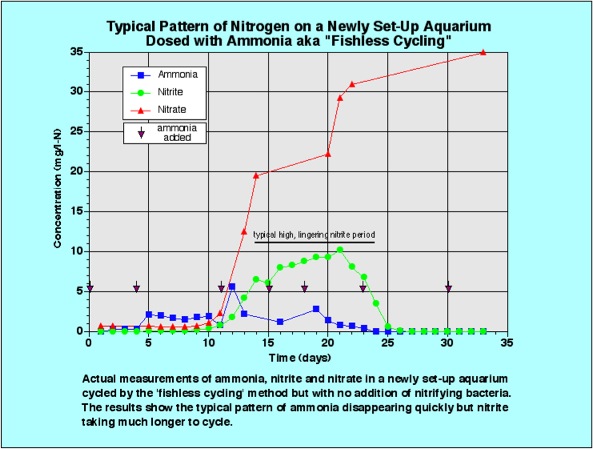
Typical timeline showing ammonia, nitrite, and nitrate levels during the cycling process
How Long Does It Take to Cycle an Aquarium?
This is the million-dollar question every beginner asks. The honest answer: it depends. Here’s a realistic breakdown:
| Cycling Method | Time Required | Difficulty Level | Fish Safety |
|---|---|---|---|
| Fishless Cycling (Pure Ammonia) | 4-6 weeks | Easy | ✅ 100% Safe (no fish present) |
| Fishless Cycling (Fish Food) | 4-8 weeks | Easy | ✅ 100% Safe (no fish present) |
| Fish-In Cycling | 6-8 weeks | Hard | ❌ High Risk (daily monitoring required) |
| Seeded Cycling (Used Media) | 1-2 weeks | Very Easy | ✅ Safe with monitoring |
| Instant Cycling (Bottled Bacteria) | 1-7 days | Easy | ⚠️ Monitor closely |
| Live Plants Method | 2-4 weeks | Moderate | ✅ Safe with light stocking |
The Best Way to Cycle Your Aquarium: Fishless Cycling
After reviewing what experts recommend and what actually works in practice, fishless cycling is hands-down the best method for beginners. Here’s why:
- No fish suffer or die during the process
- You can add a full stock of fish once cycling completes
- Much less stressful than daily water changes
- More predictable timeline
Fishless Cycling: Step-by-Step Instructions
What You’ll Need:
- Fully set up aquarium with filter running
- Aquarium heater (set to 78-82°F / 26-28°C)
- Pure ammonia OR fish food
- Water test kit (must test ammonia, nitrite, and nitrate)
- Patience (4-6 weeks)
The Process:
- Set up your tank completely: Add substrate, decorations, filter, heater. Fill with dechlorinated water. Let filter and heater run for 24 hours.
- Add ammonia source:
- Method A (Pure Ammonia): Add 5 drops per 10 gallons. Test after 1 hour. You want 2-4 ppm ammonia reading.
- Method B (Fish Food): Add a small pinch (what you’d feed 2-3 fish) every 12 hours.
- Test water every 2-3 days: Write down your results. You’re watching for specific patterns.
- Week 1-2: Ammonia stays high (2-4 ppm). Nitrite = 0. Nitrate = 0. This is normal.
- Week 2-3: Ammonia drops. Nitrite appears and rises (1-5 ppm). Nitrate starts appearing. Bacterial colonies are growing!
- Week 3-6: Ammonia drops to 0. Nitrite drops to 0. Nitrate rises (20-40 ppm). Almost done!
- Cycle Complete Test: Add ammonia to reach 2 ppm. Test after 24 hours. If ammonia = 0 and nitrite = 0, your tank is fully cycled!
- Final step: Do a 50% water change to remove excess nitrates. Your tank is ready for fish!
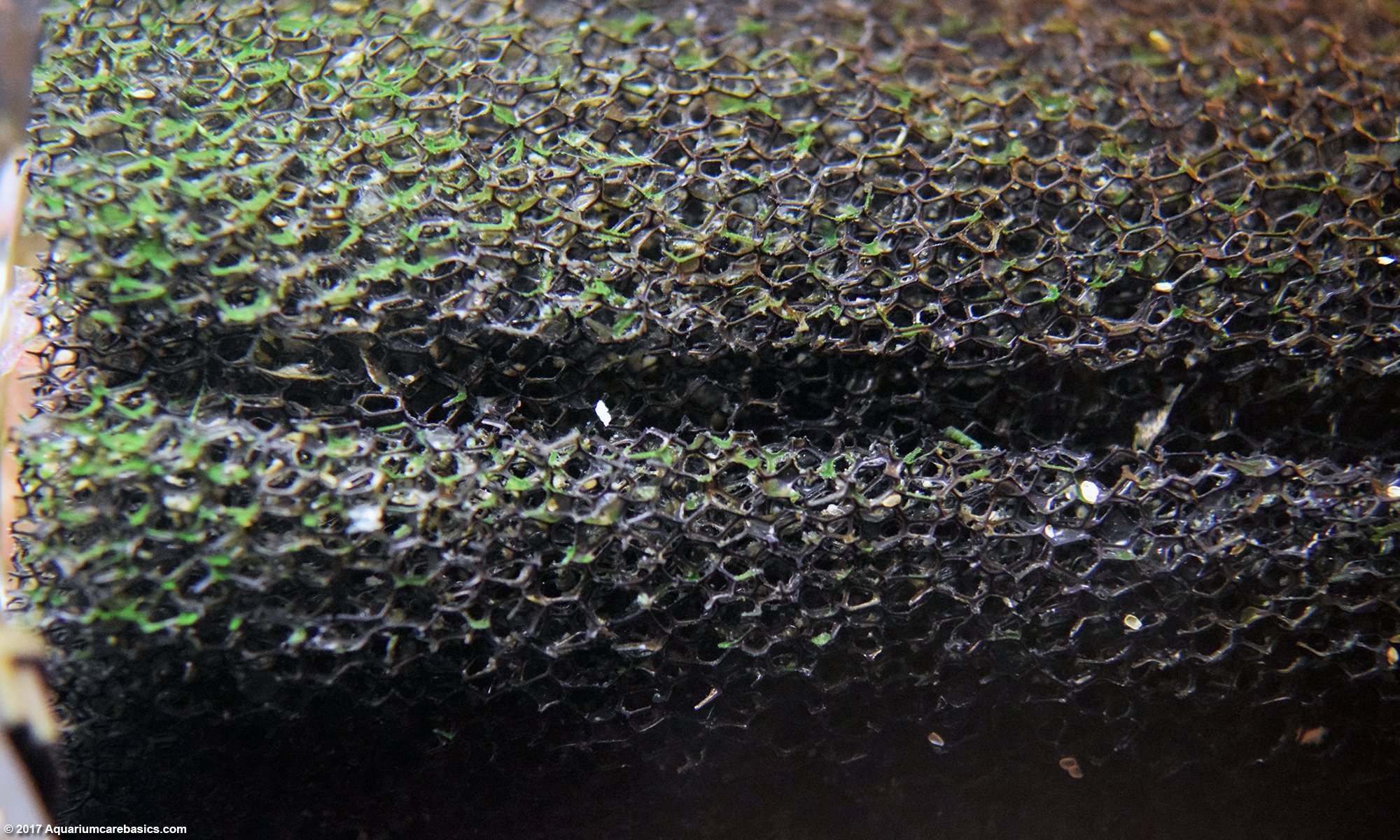
Beneficial bacteria colonize on filter media, substrate, and all aquarium surfaces
How to Speed Up the Cycling Process (Legally!)
Want to cycle faster without harming fish? Try these proven methods:
| Method | How It Works | Time Saved | Cost |
|---|---|---|---|
| Raise Temperature to 80-82°F | Bacteria multiply faster in warm water | 5-10 days | Free |
| Seeded Filter Media | Borrow used filter media from established tank | 2-4 weeks | Free |
| Bottled Bacteria (Seachem Stability, Fritz Zyme 7) | Add live bacteria directly to tank | 1-3 weeks | $8-15 |
| Live Aquarium Plants | Plants absorb ammonia and come with bacteria on leaves | 1-2 weeks | $15-40 |
| Used Gravel/Substrate | Transfer bacteria-rich substrate from cycled tank | 1-2 weeks | Free |
Fish-In Cycling: Only If You Have No Other Choice
Sometimes life happens. Maybe you received a fish as a surprise gift, or you bought fish before learning about the nitrogen cycle. If fish are already in your uncycled tank, here’s how to keep them alive:
Emergency Fish-In Cycling Protocol
- Test water daily: Ammonia and nitrite must be checked every 24 hours
- Water changes: Change 20-50% water whenever ammonia or nitrite reads above 0.25 ppm
- Use Prime: Seachem Prime temporarily detoxifies ammonia and nitrite for 24-48 hours
- Stop feeding: Feed every other day, very small amounts. Less food = less waste = less ammonia
- Add bottled bacteria: Products like Seachem Stability help establish colonies faster
- Increase aeration: More oxygen helps fish cope with stress
Understanding Your Water Test Results
A test kit is your most important tool during cycling. Here’s how to read and interpret the results:
| What You See | What It Means | What to Do |
|---|---|---|
| Ammonia: 2-4 ppm Nitrite: 0 ppm Nitrate: 0 ppm |
Early stage cycling (Week 1-2) | Keep waiting. First bacteria colony is growing. |
| Ammonia: 0-1 ppm Nitrite: 2-5 ppm Nitrate: 5-20 ppm |
Mid-stage cycling (Week 2-4) | You’re halfway there! Second bacteria colony is developing. |
| Ammonia: 0 ppm Nitrite: 0 ppm Nitrate: 20-40 ppm |
✅ Cycle complete! | Do 50% water change, then add fish gradually. |
| Ammonia: 0 ppm Nitrite: 0 ppm Nitrate: 80+ ppm |
Overstocked or infrequent water changes | Do immediate 50% water change. Increase maintenance schedule. |
| Ammonia: 0.25+ ppm (in established tank) |
⚠️ Problem! Overfeeding or filter crash | Stop feeding 24 hours. Test filter. Do 50% water change. |

A quality test kit is essential for monitoring your aquarium’s nitrogen cycle
Common Mistakes That Crash Your Cycle (And How to Avoid Them)
1. Cleaning Filter Media with Tap Water
The Mistake: You rinse your filter sponges under tap water to “clean” them.
Why It’s Deadly: Tap water contains chlorine, which instantly kills all beneficial bacteria. Your cycle crashes overnight.
The Fix: Always rinse filter media in old tank water during water changes. A little dirt is fine – that’s where the bacteria live!
2. Changing Filter Cartridges Too Often
The Mistake: You follow the manufacturer’s recommendation to “replace cartridge every month.”
Why It’s Deadly: You’re literally throwing away your bacterial colony.
The Fix: Don’t replace cartridges unless they’re falling apart. Most can last 6-12 months. If you must replace, run old and new cartridges together for 2 weeks first.
3. Adding Too Many Fish at Once
The Mistake: Your tank just finished cycling, so you buy 20 fish in one shopping trip.
Why It’s Deadly: Your bacterial colony can only handle the ammonia it’s been “trained” on. Suddenly doubling the waste overwhelms the bacteria.
The Fix: Add 2-3 small fish per week. Give bacteria time to multiply and match the new bioload.
4. Forgetting About Plants and Decorations
The Reality: Beneficial bacteria don’t just live in your filter. They colonize on:
- Substrate (gravel, sand)
- Plant leaves and roots
- Decorations and rocks
- Glass walls
- Even the heater!
Using Live Plants to Support the Nitrogen Cycle
Here’s a secret many beginners don’t know: live aquarium plants are nature’s cheat code for the nitrogen cycle. Here’s why plants are amazing:
- Plants absorb ammonia directly (before it becomes nitrite)
- They consume nitrates as fertilizer
- Plant leaves come pre-loaded with beneficial bacteria
- They provide oxygen, which helps bacteria multiply faster
Best Beginner Plants for Cycling
| Plant Name | Ammonia Absorption | Difficulty | Growth Speed |
|---|---|---|---|
| Amazon Sword | High | Very Easy | Fast |
| Anubias | Moderate | Very Easy | Slow |
| Java Fern | Moderate | Very Easy | Moderate |
| Hornwort | Very High | Easy | Very Fast |
| Water Sprite | Very High | Easy | Very Fast |
Maintaining Your Cycle After Setup: Long-Term Care
Congratulations – your tank is cycled! But the work isn’t over. Here’s how to maintain a healthy nitrogen cycle for years:
Weekly Maintenance Checklist
- Change 15-25% of water (every 7-10 days)
- Vacuum substrate to remove waste buildup
- Test nitrates (should stay below 40 ppm)
- Check filter flow (clean if water flow slows)
- Remove dead plant leaves and uneaten food
Monthly Maintenance Checklist
- Test pH, ammonia, nitrite, nitrate
- Gently rinse filter media in old tank water
- Check equipment (heater, filter, air pump)
- Trim overgrown plants
- Clean algae from glass
FAQ: Your Top Nitrogen Cycle Questions Answered
Q: Can I cycle a tank in 24 hours?
A: Not safely. Even with the best bottled bacteria products (like Bio-Spira or Tetra SafeStart), you need at least 3-7 days for bacterial colonies to establish. Products claiming “instant cycling” are marketing hype. Always test water parameters before adding fish.
Q: My cycle has been stuck at the nitrite stage for 3 weeks. What’s wrong?
A: This is frustratingly common. Try these fixes: (1) Raise temperature to 80-82°F, (2) Increase surface agitation for more oxygen, (3) Add a pinch of aquarium salt (1 tablespoon per 5 gallons), (4) Verify your pH is between 7.0-8.0 (bacteria grow poorly in acidic water), (5) Add bottled bacteria like Seachem Stability.
Q: Do I need to cycle a planted tank?
A: Yes, but it’s faster and easier. Plants absorb ammonia directly, which means you can often add fish after 2-3 weeks instead of 4-6. However, you still need to test water and add fish gradually.
Q: Can I move fish from a cycled tank to a new tank immediately?
A: No! The new tank has zero beneficial bacteria, even if you move the fish. You need to either: (1) Move 50% of the old filter media to the new tank, or (2) Cycle the new tank separately before moving fish.
Q: My cycled tank suddenly has ammonia readings. Why?
A: Common causes: (1) Dead fish decomposing in the tank, (2) Massive overfeeding, (3) Filter failure or power outage, (4) You cleaned filter media with tap water, (5) Overstocking (too many fish added too fast). Fix: 50% water change immediately, find and remove the cause, test daily until readings stabilize.
Q: Do snails and shrimp count toward bioload during cycling?
A: Yes, but minimally. A few snails or shrimp produce very little ammonia compared to fish. You can add them during cycling – they’ll actually help by eating decaying matter. Just don’t add 50 snails and expect no impact.
Final Thoughts: Patience Pays Off
I know waiting 4-6 weeks to add fish feels like forever. You’re excited. The tank looks empty and boring. Your family or roommates keep asking, “Where are the fish?”
But here’s the truth: rushing the nitrogen cycle is the #1 reason beginners fail at fishkeeping. I’ve seen it hundreds of times – someone buys a beautiful tank, gorgeous fish, and within a week, everything is dead. They give up, assuming they’re “bad at keeping fish.”
The reality? They weren’t bad at fishkeeping. They just didn’t understand the nitrogen cycle.
By reading this guide, you’re already ahead of 90% of beginners. You now know:
- Why the nitrogen cycle matters for fish survival
- How to cycle a tank properly (fishless method)
- What test results mean and when your tank is safe
- How to maintain the cycle long-term
- Common mistakes and how to avoid them
Now get out there and cycle that tank the right way. Your future fish will thank you by living long, colorful, healthy lives. You’ve got this!
 English (UK)
  Français
  العربية
  Deutsch
  Ελληνικά
  Bahasa Indonesia
  日本語
日本語  한국어
한국어  Português
  Русский
  Dansk
Dansk  Čeština
  Español
  Latviešu valoda
  Italiano
  Svenska
  Suomi
Suomi  Magyar
  Hrvatski
  Polski
  Slovenščina
  Română
  ไทย
ไทย  Türkçe
  Українська
  Tiếng Việt